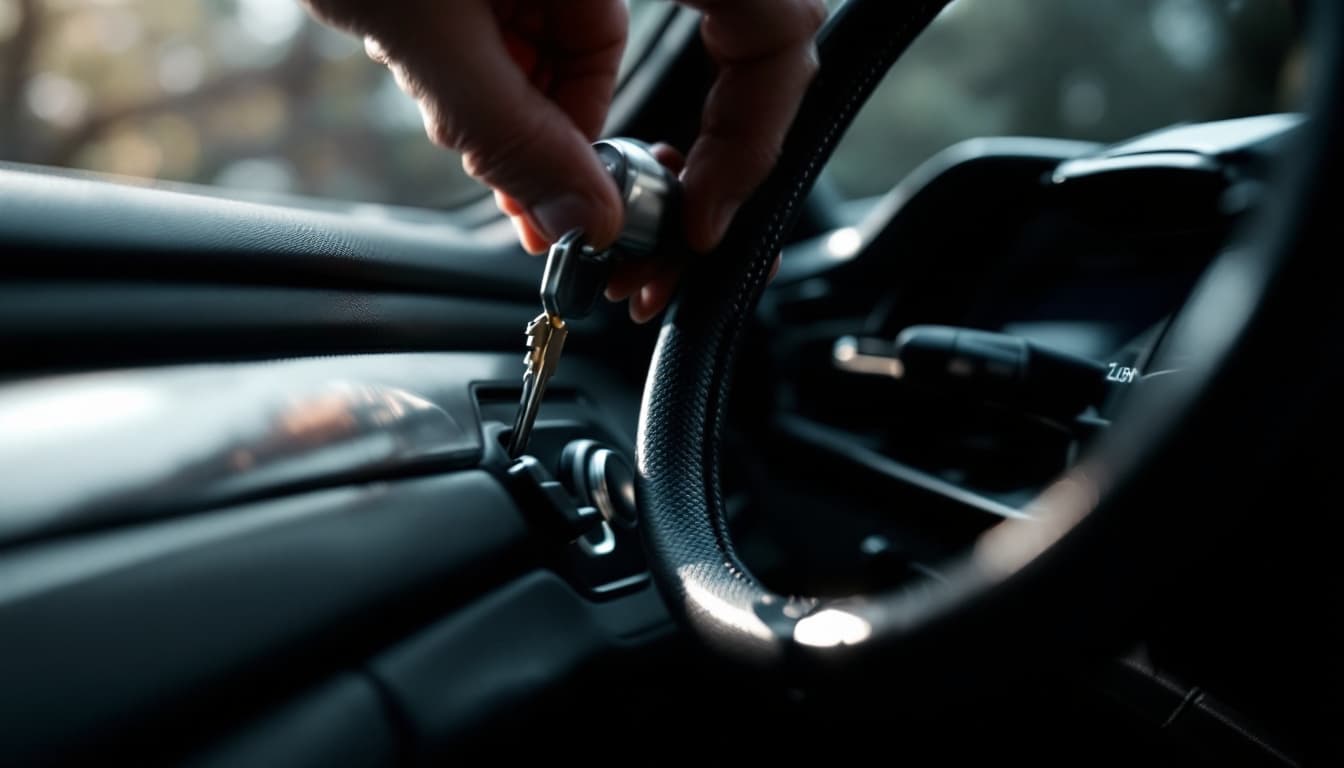
BMW E46 & E90 3 Series Ignition Lock and EWS Repair — Annetta TX
Ignition problems on a BMW E46 or E90 3 Series in Annetta TX. Telling a worn lock cylinder from an EWS or CAS fault, what each repair costs, and how to avoid replacing the wrong part.
Two BMW generations, two completely different failure stories, and one symptom that looks identical from the driver's seat: the car does not start. On an E46 the culprit is usually mechanical or the older EWS immobilizer. On an E90 it is usually the CAS module or its key slot. Diagnosing which before buying parts is the whole game — these are cars where the wrong guess costs real money. Call or text (817) 813-9396 for BMW ignition and key work in Annetta, Weatherford, Aledo, Willow Park, Hudson Oaks, Benbrook and Fort Worth.
Quick Answer
On an E46 (roughly 1999-2006), a key that will not turn is usually a worn ignition lock cylinder; a key that turns but produces a crank-and-die is usually the EWS immobilizer or its link to the engine module. On an E90 (roughly 2006-2013), most no-start complaints trace to the CAS module or the key slot rather than a mechanical lock. As of August 2026, ignition cylinder work runs $220 to $450 and CAS or EWS related diagnosis and key work runs $300 to $700.
BMW Ignition & Key Pricing in Annetta TX
| Service | Typical Price Range | Notes |
|---|---|---|
| E46 ignition lock cylinder repair | $220–$450 | Cylinder, labor, key cut |
| E46 EWS-related key programming | $250–$500 | Key registration to EWS |
| E90 spare key, CAS registration | $280–$480 | Fob, blade cut, programming |
| E90 all keys lost | $450–$800 | Origination, longer procedure |
| Key slot / start-button diagnosis | $90–$160 | Applied to repair if you proceed |
| Broken key extraction | $85–$180 | Removal without column damage |
Disclaimer: Ranges only, not quotes. Model year, exact module variant, and whether the vehicle needs origination versus a copy all change the figure. Call or text (817) 813-9396 with your VIN.
E46: What Usually Fails
The lock cylinder
The E46's ignition lock is a mechanical part with wafers that wear, and by now every one of these cars has two decades on it. Symptoms: the key has to be jiggled, or turned with the steering wheel rocked, or it sticks halfway. Do not force it. A snapped key inside the cylinder turns a straightforward repair into an extraction plus a repair.
Rocking the steering wheel gently while turning the key relieves steering-lock binding and works surprisingly often. If it does, treat that as a warning, not a solution.
The EWS immobilizer
BMW's older electronic immobilizer holds a trusted key list and coordinates with the engine module before allowing the car to run. The signature failure is a car that cranks strongly and dies within a second — fuel and spark happened, then authorization failed.
Two independent keys producing identical behavior points at EWS or its wiring rather than the keys. A single key misbehaving while another works fine points at that key.
The key itself
E46 keys have an internal rechargeable cell that charges while in the ignition. On a car that has sat, or a key that has been kept as a spare in a drawer for ten years, that cell can be genuinely dead — which produces remote functions that stopped working long ago and, eventually, a key the car struggles to read.
E90: What Usually Fails
The CAS module
CAS — Car Access System — replaced EWS as the gatekeeper. It manages the key list, the start authorization and the electronic steering lock on cars so equipped. When it fails or loses its data, the result is a car that will not recognize a perfectly good key.
The key slot
Many E90s use a slot the key fob inserts into. The slot is a mechanical part in a hot cabin with fifteen years of insertions behind it, and worn contacts inside it produce intermittent no-starts that come and go with temperature and vibration. This one gets misdiagnosed as a dead key constantly, because swapping keys does not fix it either.
The electronic steering lock
On equipped cars, a failed steering lock prevents start and can leave the wheel locked. The tell is that the car is otherwise electrically alive.
Our broader BMW key replacement guide covering CAS, FEM and BDC systems maps how these modules evolved, and the BMW X3 and X5 ignition and CAS repair guide covers the same components in the SUV chassis.
The Diagnostic Order That Saves Money
Work through this before anyone buys a part.
One — does the key turn or insert normally? If it physically resists, that is mechanical. Electronics are not the issue yet.
Two — does the dash light up? If nothing wakes at all, check the battery. BMWs of both generations are notably unhappy on low voltage, and a weak battery produces a spectacular spread of unrelated-looking faults. This is the cheapest thing on the list and it is skipped constantly.
Three — does it crank? Cranking and dying is an authorization failure. Not cranking at all, with a live dash, points at the start circuit, the steering lock, or the module.
Four — does a second key behave differently? Different behavior means the first key is the suspect. Identical behavior means the car is.
Five — only now, a scan. Reading the actual fault codes from CAS or EWS costs a fraction of a wrong module purchase.
For the general version of the crank-and-die symptom across makes, our immobilizer and security light no-start guide is the plain-language walkthrough.
Why Used BMW Modules Are Risky
This is worth a warning, because the parts market makes it look easy.
A used CAS or EWS module from a salvage car arrives married to the donor vehicle's key set and engine module. On BMW that pairing is not incidental — it is the security design. Depending on the generation and the specific module, reprogramming a used unit to your car ranges from routine to genuinely impossible.
Before buying anything, send the part number and your VIN. Checking costs nothing. Buying a module that cannot be married to your car costs whatever you paid plus the labor to discover it.
What Mobile Service Covers on These Cars
Lock cylinder work, key cutting to VIN, key registration, and diagnosis all happen at the vehicle. That matters because a BMW that will not start is a flatbed away from a dealership, and dealership diagnostic time on a twenty-year-old E46 is not a good value proposition.
What mobile service does not replace is a genuine mechanical repair inside the transmission tunnel or a module that needs bench work. When that is the finding, you will be told plainly rather than sold a key.
Coverage: Annetta, Weatherford, Aledo, Willow Park, Hudson Oaks, Benbrook and Fort Worth.
Frequently Asked Questions
Why will my BMW E46 key not turn in the ignition?
Most often a worn lock cylinder — twenty-plus years of wafer wear. A locked steering column can also bind it; rocking the wheel gently while turning the key often releases it. Do not force the key, as a snapped blade inside the cylinder turns a simple repair into an extraction job first.
My E46 cranks but dies immediately — is that the key?
That pattern is classic EWS immobilizer refusal. It can be the key, the EWS module, or the link between EWS and the engine module. If a second key does exactly the same thing, the car is the more likely suspect and a scan should come before any purchase.
What is the CAS module on an E90?
Car Access System — the module that holds the trusted key list and authorizes starting, and on equipped cars manages the electronic steering lock. Most E90 no-start complaints that are not battery-related trace back to CAS or to the key slot rather than to a mechanical ignition lock.
Can a used CAS or EWS module be reprogrammed to my car?
Sometimes, and sometimes not. These modules are paired with the donor vehicle's keys and engine module by design. Send the part number and your VIN before buying — a module that cannot be married to your car is a total loss.
How much does a BMW 3 Series key cost?
As of August 2026, a spare for an E90 with CAS registration typically runs $280 to $480, and all keys lost runs $450 to $800. E46 key programming to EWS runs $250 to $500. Your VIN establishes the exact system and part.
Should I check the battery first?
Yes, always. Both generations produce a wide spread of confusing electrical faults on low voltage, including no-start behavior that looks exactly like a key or module failure. It is the cheapest thing to eliminate and it is eliminated last far too often.
Diagnose Before You Buy Parts
On these cars the wrong guess is expensive and the right diagnosis is cheap. Call or text (817) 813-9396 with your year, VIN and a description of exactly what the car does.
Article written by the Annetalocksmith Automotive Locksmith Team. Reviewed by a working automotive locksmith technician.