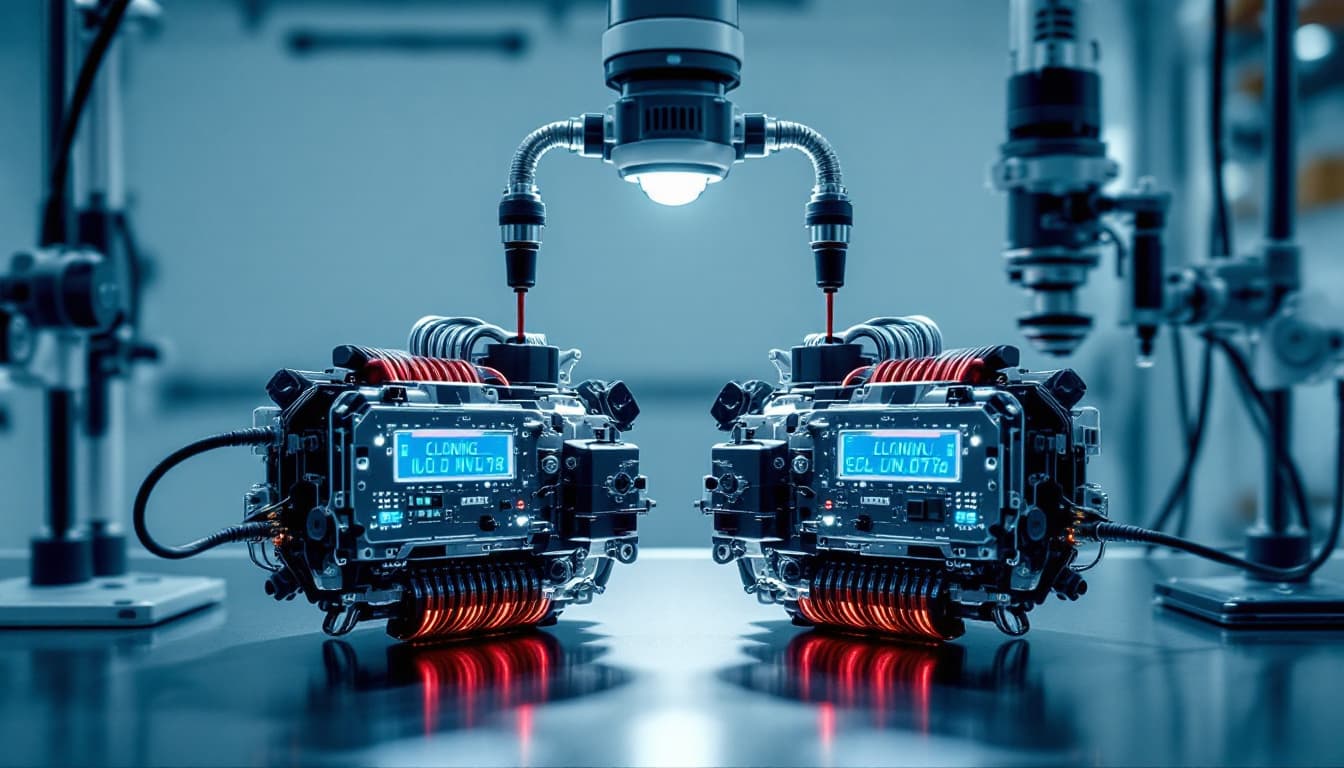
ECU Cloning vs. Replacement: Which Is Right for Your Car? — Annetta TX
ECU cloning vs replacement in Annetta TX. When cloning a failed engine computer onto a donor unit beats buying new, how cloning preserves immobilizer data, and what each path costs.
When an engine computer dies, there are two ways back on the road: program a new module from scratch, or clone your old ECU's identity onto a working donor unit. Each has real advantages, and picking wrong can cost hundreds of dollars or leave you with a car that runs but won't start reliably. Call or text (817) 813-9396 for ECU cloning and replacement programming in Annetta, Weatherford, Aledo and across Parker County.
Quick Answer: Cloning vs. Replacement
Cloning copies everything from your failed ECU — VIN, calibration, immobilizer data, learned adaptations — bit-for-bit onto an identical donor module. The car can't tell the difference, so no key relearn or dealer involvement is needed. Replacement installs a new or reman module that must be programmed with your VIN and calibration, then security-married to your keys. Cloning wins when the original module is readable and an identical donor exists; replacement wins when the original is too dead to read or the platform makes clean new-module programming easy.
ECU Cloning & Replacement Pricing in Annetta TX
| Path | Typical Price Range | Notes |
|---|---|---|
| ECU clone (donor supplied by you) | $200–$400 | Original must be readable |
| ECU clone including sourcing donor | $300–$600+ | Availability varies |
| New ECU programming (VIN + calibration) | $150–$350 | Plus module cost |
| Immobilizer relearn after new ECU | $100–$250 | Not needed for clones |
Disclaimer: Ranges only. Cloneability depends on the exact module family and how it failed. Call or text (817) 813-9396 with your VIN and module part number for a straight answer.
How ECU Cloning Works
Reading the original
The failed module's memory chips are read — sometimes over the diagnostic connector, more often on the bench, occasionally chip-off for badly damaged units. What we're after is the identity data: VIN, immobilizer secrets, and calibration.
Writing the donor
An identical module (same part-number family and hardware revision) is flashed with your original's data. Done right, the donor is electronically indistinguishable from the module the car was born with.
Why the immobilizer just works
Because the immobilizer data came over in the copy, your existing keys authenticate exactly as before. No relearn, no dealer security session, no risk of a platform that resists new-module marriage. This is cloning's killer feature on makes with troublesome security procedures.
When Cloning Is the Better Path
- The original still reads. A module that failed in its output drivers or power section often has perfectly intact memory.
- The platform's new-module procedure is painful or dealer-locked. Cloning sidesteps the entire security-marriage problem.
- You found a cheap identical donor. Salvage modules that would be useless installed directly (wrong VIN, locked security) are perfect clone targets.
- Older or discontinued modules. When new stock no longer exists, cloning onto used hardware is sometimes the only path.
When Replacement Is the Better Path
- The original is unreadable — fire, flood, or catastrophic board damage can take the memory with it.
- New modules are cheap and the platform programs easily. Some makes make VIN-writing and relearn painless; a fresh module with full factory support beats twenty-year-old donor hardware.
- The failure was memory corruption itself. Cloning corrupted data reproduces the fault. A corrupted-but-readable image sometimes can be repaired, but a clean new module is often saner.
The Donor-Matching Trap
The single most common cloning mistake is a near-miss donor: right part number on the label, different hardware revision inside. Clones between mismatched revisions can appear to work and then misbehave. We verify hardware compatibility before writing anything — and if you're sourcing your own donor from a salvage yard, send us the numbers first and we'll tell you if it's a valid match.
Frequently Asked Questions
Is a cloned ECU legal?
Yes — cloning your own vehicle's data onto a replacement module for repair purposes is a normal, legitimate repair technique. What it is not for is bypassing anti-theft on a car you don't own; proof of ownership is part of the job.
Will the car know the ECU was cloned?
No. A proper clone carries the same VIN, security data, and calibration as the original. Diagnostics, inspections, and your keys all behave exactly as before.
My ECU got wet and the car died. Clone or replace?
Water-damaged modules are often still readable once stabilized — we've recovered data from modules that looked hopeless. If the memory reads, cloning preserves everything. If not, replacement with fresh programming is the fallback.
Can you clone just the immobilizer part onto a new module?
On many platforms, yes — immobilizer data can be transferred or adapted separately, which combines a new module's reliability with no-hassle key acceptance. Whether that's available depends on the module family.
Do you do this on-site or is it a bench job?
Reading and writing usually happens on the bench in the van; the vehicle work (removal, install, verification) happens at your location in Annetta, Willow Park, Benbrook, Fort Worth or anywhere in Parker County. Most jobs are single-visit.
Get a Straight Answer Before You Buy Anything
The wrong module purchase is the most expensive step in an ECU failure. Before you order new or bid on a salvage unit, call or text (817) 813-9396 with your VIN and the module's part number — we'll tell you whether cloning or replacement is the smarter path for your exact car.
Article written by the Annetalocksmith Automotive Locksmith Team. Reviewed by a working automotive locksmith technician.