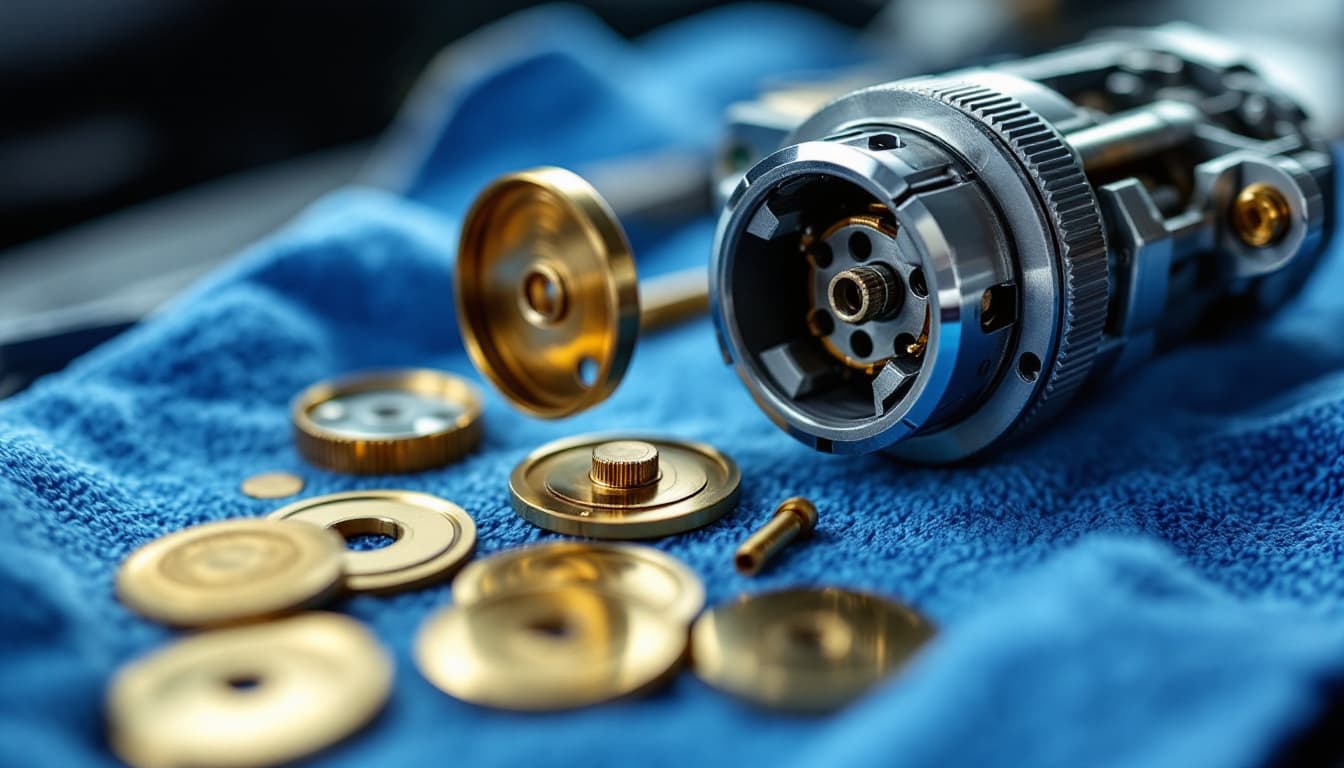
Ford Fusion & Taurus Ignition Lock Cylinder Repair — Annetta TX
Ignition lock cylinder repair for 2013–2019 Ford Fusion and Taurus in Annetta TX. Worn wafers, a key stuck in START, a key that won't come out, and how a cylinder fault differs from an electrical switch failure.
The heavy keyring is the villain in almost every one of these stories. A gym fob, a house key, a bottle opener and a carabiner hanging off the ignition of a 2015 Fusion is a slow-motion wrecking ball, and after a few years the cylinder starts telling you about it. Call or text (817) 813-9396 for ignition work on Fusion and Taurus sedans across Annetta, Weatherford and Fort Worth.
Quick Answer
On a 2013–2019 Fusion or 2013–2019 Taurus, the classic complaints — the key won't turn, it turns but sticks in START, or it refuses to come back out — are almost always mechanical wear inside the lock cylinder rather than an electrical failure. The internal wafers get rounded, the return spring gets tired, and the tolerances that were tight from the factory stop being tight. A replacement cylinder can usually be rekeyed to your existing key so you keep the key you already own, and the whole job is done at the car.
Ignition Repair Pricing in Annetta TX
As of July 2026, typical Parker County ranges:
| Service | Typical Price Range | Notes |
|---|---|---|
| Ignition diagnosis (cylinder vs. switch vs. lock) | $75–$150 | Applied toward the repair |
| Lock cylinder replacement, rekeyed to your key | $220–$430 | Existing key keeps working |
| Cylinder replacement with new keys made | $260–$500 | Includes transponder registration |
| Key extraction from a seized cylinder | $95–$185 | Before any further diagnosis |
| Electrical ignition switch replacement | Quote | Different part, different job |
Disclaimer: Ranges only. Model year, trim, column type and whether the key survives all move the number. Call or text (817) 813-9396 and describe what the key is doing.
What's Actually Wearing Out
The wafers
Inside the cylinder is a stack of spring-loaded wafers. The cuts on your key push each one to a precise height, and when they all line up the cylinder can rotate. That's the whole mechanism. Two things degrade it. The key itself wears down over years of use, so its cuts get shallower and the wafers no longer reach the right height. And the wafers wear at their edges, so they no longer sit cleanly in their channels. Either way the alignment gets sloppy, and sloppy alignment shows up as a key you have to jiggle, wiggle, or lift on to get anything to happen.
The keyring effect
Now add weight. Hanging a pound of hardware off the key applies a constant downward and sideways load right at the cylinder's mouth. That load accelerates every kind of wear at once — it grinds the key against the wafers, it wallows out the face of the cylinder, and over enough years it can even stress the housing. This is the single most preventable cause of ignition failure in these sedans, and the fix is free: drive with the vehicle key on its own small ring and keep the rest on a separate ring.
The return spring
When the key turns to START and won't spring back to RUN, that's often the return mechanism rather than the wafers. It's a distinct failure with a distinct feel: turning is fine, returning is not. It also happens to be dangerous in a small way — a starter that keeps engaging chews itself up quickly — so a key that hangs in START is worth handling this week rather than next month.
The key that won't come out
The other end of the same complaint is a key that turns off fine but refuses to leave the cylinder. There are two usual causes and they're easy to tell apart. If the vehicle isn't fully in Park — or the shifter cable has enough slack that the vehicle thinks it isn't — an interlock deliberately holds the key captive. Rocking the shifter firmly into Park and trying again resolves that one on the spot. If Park is confirmed and the key still won't withdraw, the cause is inside the cylinder: a wafer that isn't dropping back into its channel, usually because it's worn or because debris has found its way in. That second version is a repair, not a technique, and forcing the key is the fastest way to turn a cylinder job into a broken-key extraction job as well.
Three Different Faults, Three Different Repairs
This is the part most owners get wrong, and it is where money gets wasted.
A worn lock cylinder
Mechanical. The symptom is about feel: sticking, jiggling, having to hold the key at an angle, or having a spare that works better than your daily key. Electrically, everything is normal — dash lights come on, accessories work. This is the most common of the three on these cars and it's the one a locksmith fixes directly.
A failed ignition switch
Electrical. The switch is the component behind the cylinder that actually sends power to the various circuits. When it fails, the key turns perfectly smoothly and nothing happens — no dash lights in the RUN position, or accessories that cut out when you turn to START. The tell is a normal mechanical feel with an abnormal electrical result. That's a different part than the cylinder, and lumping them together is why some quotes look wildly different from others.
A steering-lock fault
The steering column has a lock that engages when the wheel is turned against its stop while parked. If the wheel is loaded against that lock, the key genuinely cannot turn — and there's nothing wrong with the car at all. The fix is to rock the steering wheel gently side to side while applying light key pressure. It works often enough that it should be the first thing anyone tries before calling anybody. If the wheel is free and the key still won't turn, then you're back to the cylinder.
Sorting these three apart at the vehicle takes a few minutes and saves several hundred dollars. The same logic applies across brands; we walked through it from the GM side in our Cadillac CTS and SRX ignition repair guide, and the diagnostic order is the same on a Fusion.
Keeping Your Existing Key
Here's the detail owners appreciate most. When a cylinder is replaced, it arrives with its own keys — which would mean you now carry two different keys for one car. That's avoidable. The new cylinder can be rekeyed so its wafers match the key you already have, meaning your original key still works and your spare still works. Nothing on your keyring changes.
There is one honest caveat. If your original key is itself badly worn — and after a decade in a Texas pocket, many are — rekeying the cylinder to a worn key just builds the wear back into a brand-new part. In that case the better call is to cut a fresh key to the factory code and rekey the cylinder to that, so you start clean. A technician can look at your key and tell you which situation you're in.
Symptoms Worth Acting On Early
An ignition rarely fails all at once. It warns you, usually for months.
The spare key works noticeably better than the daily key. You've started parking so the wheel isn't loaded because turning is easier that way. The key needs a small lift or push before it'll rotate. It occasionally hangs on the way back out. Any of those is the early stage of the same failure, and every one of them is cheaper to address before the day the key finally won't turn at all in a parking lot in Willow Park.
The worst version is a key that snaps off in the cylinder, because now you have an extraction job stacked on top of a replacement job. Extraction is doable — the broken piece comes out without destroying the column when it's done properly — but it's an avoidable expense.
Mobile Ignition Work Across Parker County
Column work happens at the vehicle. There's no reason to tow a sedan for an ignition cylinder, and towing a car whose key won't turn is its own headache. Coverage runs across Annetta, Weatherford, Aledo, Willow Park, Hudson Oaks, Benbrook, Fort Worth and 76008. Trucks and body-on-frame vehicles have their own column quirks — the Nissan Frontier and Titan ignition repair walkthrough covers that side if you also have a work truck in the driveway.
An Honest Boundary
Two straight statements. First, if diagnosis points at the electrical ignition switch or at a wiring fault rather than the lock cylinder, that's a different repair with a different price and you'll hear that up front rather than after the fact. Second, on the newest end of this platform and on push-button-start Fusion trims, the hardware is different from a traditional cylinder, so a technician confirms your exact configuration before quoting a firm number.
Frequently Asked Questions
Why won't my Ford Fusion key turn in the ignition?
Try rocking the steering wheel side to side with light pressure on the key first — a loaded steering lock is a common and completely free fix. If the wheel moves freely and the key still won't turn, the likely cause is worn wafers inside the lock cylinder, often accelerated by a heavy keyring.
My key gets stuck in the START position. Is that dangerous?
It's worth addressing promptly. A key that won't spring back from START usually means a failed return mechanism, and a starter that stays engaged wears out quickly. It's a mechanical fault inside the cylinder rather than an electrical problem.
Can I keep my current key if the ignition cylinder is replaced?
Usually yes. The replacement cylinder can be rekeyed to match your existing key so nothing on your keyring changes. If your original key is heavily worn, a fresh key cut to code is a better foundation than building old wear into a new part.
How do I tell a bad cylinder from a bad ignition switch?
Feel versus function. A bad cylinder feels wrong — sticking, jiggling, needing an angle — while the electrical side behaves normally. A bad switch feels perfectly smooth but produces nothing: no dash lights in RUN, or accessories dropping out when you turn to START.
Is ignition repair on a Taurus done at my house?
Yes. Column and cylinder work is performed at the vehicle across Parker County and Fort Worth, which avoids towing a car whose key won't turn in the first place.
Fix It Before It Strands You
An ignition that's getting harder to turn is a countdown, not a quirk. Call or text (817) 813-9396 and describe exactly what your key is doing — that description alone usually narrows it to one of three faults.
Article written by the Annetalocksmith Automotive Locksmith Team. Reviewed by a working automotive locksmith technician.