WIN Ignition Module Replacement Cost in Annetta TX (2026)
What a Chrysler, Dodge, Jeep or Ram WIN ignition module repair or replacement costs in Annetta TX as of September 2026, plus PIN access and FOBIK programming.
WIN Ignition Module Replacement Cost in Annetta TX (2026)
As of September 2026, repairing a Chrysler, Dodge, Jeep or Ram Wireless Ignition Node (WIN) runs $150 to $300 in the Annetta area where the unit is rebuildable, and replacing it with a new or reman module plus programming runs $350 to $650. Diagnosis is $95 to $180 and applies toward the repair. Each FOBIK then costs $75 to $150 to program.
The work is mobile across Parker County, with no tow required. Call or text (817) 813-9396.
Quick Answer
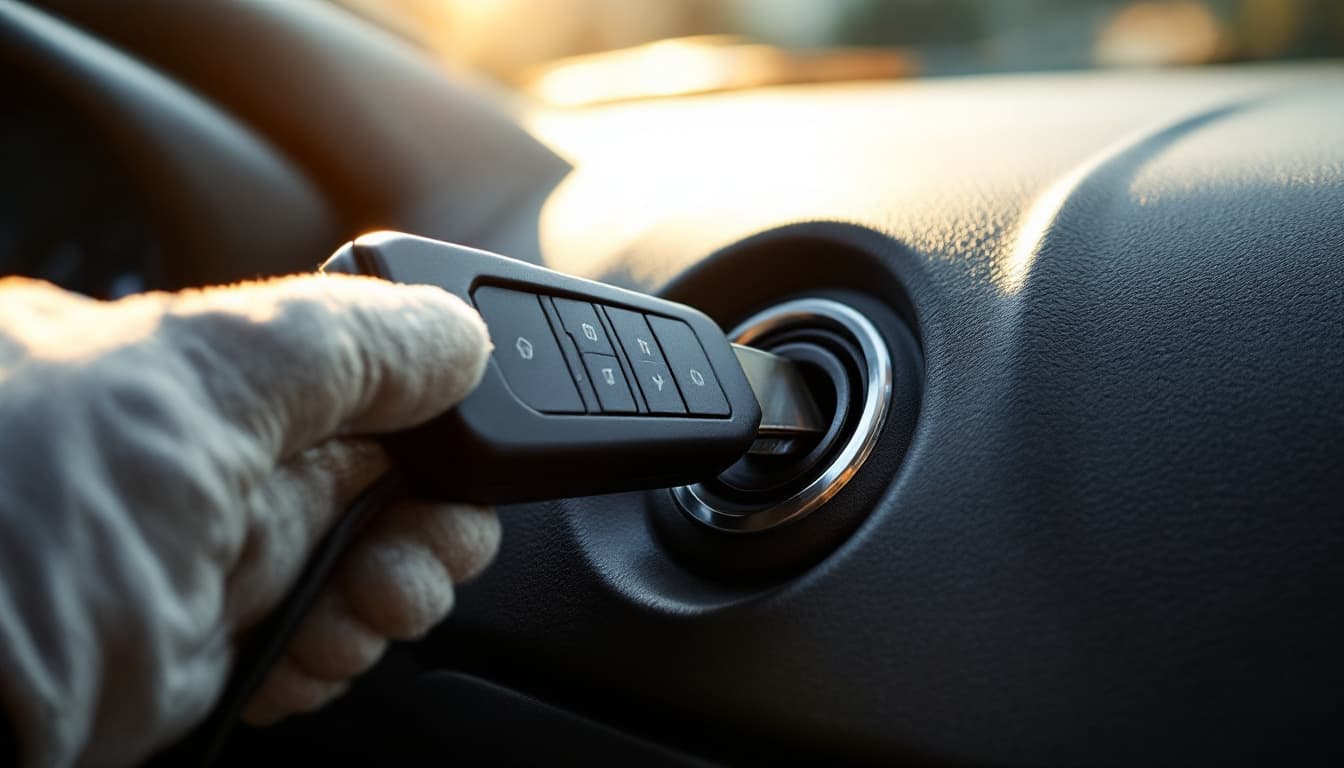
The WIN is the round slot in the dash where a Chrysler-family FOBIK goes in and turns. It is not just a switch. It is the immobilizer brain for the vehicle: it reads the transponder in the fob, holds the vehicle's secret key, and tells the engine computer whether the engine is allowed to run. That is why a WIN job costs more than a traditional ignition cylinder and why the price depends so heavily on one question — can the existing module be repaired, or does it have to be replaced and married to the vehicle again?
A repair keeps the original electronics and the original pairing with your fobs, so it is the cheaper outcome. A replacement means a module that knows nothing about your van or truck has to be introduced to it with the vehicle PIN, and then every FOBIK you own has to be taught to the new module. The table below breaks down each piece.
WIN Ignition Module Pricing in Annetta TX
| Service | Typical Price Range | Notes |
|---|---|---|
| Diagnosis — WIN, fob, shifter or wiring | $95–$180 | Applied toward the repair |
| WIN repair — turning, sticking fob or slot release | $150–$300 | Where the unit is rebuildable |
| WIN replacement with new or reman module + programming | $350–$650 | Module married to the vehicle, fobs reprogrammed |
| Used WIN programmed to the vehicle | $300–$500 | Only where compatible |
| FOBIK programming, per fob | $75–$150 | Your existing working fobs |
| New FOBIK supplied and programmed | $150–$275 | Emergency blade cut to match |
| Mobile call-out to your location | Included in quote | No tow required |
| Evening, weekend or holiday dispatch | Add-on | Quoted before dispatch, never added after |
Disclaimer: Ranges only. Model, year, whether the unit can be rebuilt, the module source, and how many fobs you want working at the end all move the final figure. Call or text (817) 813-9396 with the year, make, model and VIN for a firm number.
Which Vehicles Use a WIN
Chrysler, Dodge, Jeep and Ram used the Wireless Ignition Node across a large part of their lineup during the FOBIK era, roughly the late 2000s into the mid 2010s, with the minivans carrying it the longest. The platforms we see most around Annetta, Aledo and Willow Park are:
- Dodge Grand Caravan and Chrysler Town and Country — the most common WIN vehicles in Parker County by a wide margin, and the ones most likely to show wear, simply because minivans get daily use and carry heavy key rings.
- Dodge Journey — same family of ignition, same failure patterns.
- Dodge Avenger, Chrysler Sebring and the Chrysler 200 in their 2008 to 2014 FOBIK years.
- Dodge Charger, Dodge Challenger and Chrysler 300 in their FOBIK years, before the later push-button systems took over. The 300 carried the slot in the 2008 to 2010 range.
- Ram 1500, 2500 and 3500 FOBIK trucks from roughly 2009 to 2012.
- Jeep Grand Cherokee WK from 2008 to 2010 and the Jeep Commander.
Trim level matters on some of these. A higher trim may have a keyless-go system layered on top of the slot, where the fob can stay in your pocket and a button sits in the WIN opening. That adds antennas and modules to the diagnosis but does not change the fact that the WIN is still the immobilizer at the center of it.
If you drive one of the minivans specifically, the Grand Caravan and Journey WIN repair walkthrough goes deeper into the failure patterns on those two platforms.
Symptoms That Point at the WIN
Four complaints bring almost every WIN call in, and they do not all mean the same thing.
The fob goes in but will not turn
This is the classic mechanical failure. Inside the WIN there is a rotating assembly with a small internal mechanism that locks and unlocks rotation depending on whether a valid fob has been recognized. When that mechanism wears or a small internal part breaks, the fob sits in the slot and refuses to turn, or turns only with jiggling and pressure.
Two things share this symptom. One is genuine wear inside the WIN. The other is a worn fob — the plastic body of a FOBIK wears where it rubs the slot, and a fob with rounded or chipped edges can fail to seat far enough for the node to read it or release the rotation. Trying a second fob is the first free test. If the spare turns and the daily fob does not, the fob is the problem, not the WIN.
The fob is stuck and will not come out
A fob that turns back to off but will not release is frequently not the WIN at all. On most of these vehicles, the fob is held in the slot until the transmission is confirmed in Park. That confirmation comes from a switch in the shifter assembly. When the shifter's park switch or its wiring fails, the WIN never gets permission to release the fob, and it holds it forever.
This is the single most common misdiagnosis on these vehicles. Owners get quoted a new ignition node when the actual failure is a shifter switch or a broken wire under the console. That is exactly why diagnosis comes first — a stuck fob caused by the shifter is a completely different repair and invoice than a stuck fob caused by a failed release inside the WIN.
When the release mechanism inside the WIN genuinely has failed, that is usually repairable and falls in the $150 to $300 band.
No crank with a good fob
The dash lights come up, the fob turns, and nothing happens — or the engine cranks and dies after a second or two. The security light may flash. This points at the immobilizer conversation between the fob, the WIN and the engine computer breaking down somewhere.
The possibilities are a fob whose transponder has failed, a WIN that can no longer read transponders through its antenna ring, a WIN that can read them but has lost its stored data, or a communication problem on the vehicle network between the WIN and the engine computer. Scan data separates these quickly. If both of your fobs fail in exactly the same way, the fob is almost certainly not the cause.
Intermittent everything
Accessories drop out, the fob sometimes turns and sometimes does not, warnings come and go. Intermittent WIN behavior often traces to a failing internal connection or to the WIN's own electrical supply and ground. It is worth diagnosing before replacing, because an intermittent power supply will make a brand-new WIN behave exactly like the old one.
Repair Versus Replacement
This is the decision that swings the invoice by several hundred dollars, so it is worth understanding what each actually involves.
When the WIN can be repaired
A repair means removing the WIN, opening it, and addressing the mechanical failure — the turning assembly, the part that locks rotation, or the slot release — while leaving the electronic board and its stored data exactly as they were. Because the board is untouched, the WIN still holds your vehicle's secret key and still recognizes every fob you already own. Nothing has to be reprogrammed.
That is why repair is the $150 to $300 line on the table. It is labor and parts on the mechanical side, with no security procedure afterward. When the failure is purely mechanical and the unit is in a condition that rebuilds cleanly, repair is the recommendation every time.
Repair is not always possible. A board with electrical damage, corrosion from a spilled drink, or a failure in the transponder-reading circuit is not a mechanical repair. Some units also arrive so worn that a rebuild would not last, and we will say so rather than sell a repair that brings you back in six months.
When the WIN has to be replaced
A replacement module arrives without your vehicle's secret key and without any knowledge of your fobs. Getting it working involves three steps, and they are why replacement costs $350 to $650 rather than the price of the part alone:
- Physical installation. The old node comes out, the new one goes in, connectors are checked.
- Marrying the module to the vehicle. The WIN and the engine computer must agree on a shared secret. The procedure to establish that requires the vehicle's security PIN.
- Programming every FOBIK. Each fob you want to keep using has to be taught to the new module. Fobs that were paired to the old WIN do not automatically transfer.
On many of these vehicles, the WIN is the module that stores which fobs are allowed. Replace it and the vehicle, as far as the immobilizer is concerned, has no keys at all until the fobs are programmed again. Plan for that step as part of the job, not as a surprise afterward.
The PIN and Secret Key, in Plain English
This is the part owners find most confusing, and it is the reason a parts-counter WIN cannot simply be plugged in.
Chrysler-family immobilizers of this era use a four-digit security PIN tied to the vehicle. Any procedure that changes what the immobilizer trusts — adding fobs, replacing the WIN, replacing the engine computer — asks for that PIN. Without it, the programming session will not proceed.
Professional locksmiths obtain vehicle security information through the NASTF Vehicle Security Professional registry, which is the industry channel manufacturers use to release security data to credentialed people after ownership is verified. That is why we ask for proof of ownership and the VIN before any WIN or fob programming. It protects you; it is also the requirement that keeps a stolen van from being re-keyed in a parking lot.
The secret key is a separate concept. It is data shared between the WIN and the engine computer so each can confirm the other is genuine. When a new WIN is installed, the procedure establishes that shared secret between the new module and the existing engine computer. If the engine computer is also being replaced or reprogrammed at the same visit, the order of operations matters, and it is the sort of work covered in our overview of ECM computer programming and how the modules share responsibilities.
The Used WIN Question
Online listings and salvage yards are full of WIN modules, and they are tempting at a fraction of the new price. The honest answer is that a used WIN can work, can be a real saving, and can also be a complete waste of money. The difference comes down to one thing: a used WIN from another vehicle already carries that donor vehicle's secret key and fob list.
On platforms where the procedure allows a used node to be reset and married to a new vehicle, programming a used WIN runs $300 to $500, and total cost can come in below a new unit. On platforms and part numbers where the donor data cannot be cleared through the available procedures, the used WIN will never accept your vehicle, no matter how many times it is tried.
There are other used-part traps worth naming:
- Part number mismatch. WINs look alike across model years and trims but are not interchangeable. A module from a van with keyless-go features is a different part than one from a base model, and the wrong one may install and never work properly.
- Unknown wear. A used WIN may have the same worn turning mechanism that killed yours. Saving money on a part that fails the same way next year is not a saving.
- No way to test it off the vehicle. Most used WINs are sold untested because there is no meaningful bench test for a buyer.
The way to avoid the wasted purchase is simple: ask before you buy. Send us the year, make, model, VIN and the part number printed on the used module you are looking at. If that combination marries cleanly, we will say so. If it does not, you have just saved the price of the part.
FOBIK Costs After a Replacement
Every WIN replacement ends with fob programming, so budget for it in the same conversation.
Programming a fob you already own is $75 to $150 per fob. Your fobs are fine; they simply need to be introduced to the new module. Most owners have two, and some have a third that lives in a drawer. We recommend programming every fob you intend to keep, because a fob that was not programmed to the new WIN will simply fail to start the vehicle later, and it tends to be discovered at the worst possible moment.
A new FOBIK supplied and programmed is $150 to $275. That includes cutting the emergency blade that lives inside the fob to match your door lock, so the new fob opens the door manually if the battery dies. If your existing fobs have badly worn shells — the rounded edges that contribute to turning problems — replacing a fob instead of reprogramming it can be the better call, since a worn fob in a new WIN will eventually cause the same symptom.
If you are only looking to add a spare rather than replace the ignition, the Town and Country FOBIK spare key guide covers that simpler job, and the broader Chrysler, Dodge, Jeep and Ram FOBIK and WIN module keys page explains how the fob and the node work together across the lineup.
What Changes the Price
Six variables, all establishable before we dispatch:
1. Repair or replacement. This is the largest swing on the invoice. A rebuildable mechanical failure stays in the $150 to $300 band. An electronic failure or an unrebuildable unit moves you into replacement at $350 to $650.
2. The real cause. A fob that will not release because of the shifter park switch is not a WIN repair at all. A fob that will not turn because its own shell is worn needs a fob, not a node. Diagnosis at $95 to $180, applied toward the repair, is what prevents paying for the wrong part.
3. Module source. New or reman takes the standard path. Used is compatible on some platforms and useless on others, as covered above.
4. How many fobs. Each existing fob programmed is $75 to $150. Each new fob supplied and programmed is $150 to $275. Two fobs is the practical minimum for any household that depends on the vehicle.
5. Model and trim. A keyless-go van or a performance sedan has more modules involved in the immobilizer conversation than a base van. That can add time to diagnosis and programming.
6. When and where. Mobile call-out is included in the quote. Evening, weekend and holiday dispatch is an add-on that is always quoted before we drive out, never added to the bill afterward.
Why Mobile Makes Sense for a WIN
A vehicle with a WIN failure often cannot be driven at all. If the fob will not turn, the van does not move. If the fob is stuck in the slot, you can drive, but you cannot remove the key and lock up. Neither situation is improved by a tow truck.
Mobile service means the work happens where the vehicle sits — in a driveway in Annetta, a church parking lot in Aledo, a school pickup lane in Willow Park, a work lot in Hudson Oaks or Benbrook, or a customer's shop floor in Fort Worth. For a minivan owner, that often means the difference between losing a day to towing and having the family vehicle back the same afternoon.
It also removes a real cost. In a county where the nearest dealer service bay can be a long tow away, the tow alone can approach the price of a WIN repair. Our quote covers the drive out and the work, so the number you hear on the phone is the number you pay, unless diagnosis reveals a different fault and you approve the change.
What the Appointment Looks Like
For a WIN that has failed and needs attention, a typical visit runs like this:
- Fob check. Both of your fobs are tried, including the spare. A spare that works when the daily fob does not ends the investigation right there and saves you a WIN.
- Shifter and park signal check. For a stuck fob, we confirm whether the WIN is actually being told the vehicle is in Park.
- Network scan. Every module is read so we know the state of the immobilizer conversation and whether the engine computer is reporting security faults.
- Removal and inspection. If the WIN is the fault, it comes out and is inspected to decide between repair and replacement. You get that decision and the price before any further work.
- Repair or replacement and programming. A repair is reassembled and tested with your existing fobs. A replacement is installed, married to the vehicle with the PIN, and every fob you want working is programmed.
- Verification. Multiple start cycles with every fob, fob release confirmed in Park, security light confirmed off, codes cleared.
Most WIN jobs finish in a single visit. The exceptions are when the wrong replacement part has been bought in advance, or when diagnosis finds a separate network or power problem that has to be fixed first. We would rather tell you that on the day than hand back a van that fails again next week.
If the vehicle turns out to have a conventional ignition problem rather than a node problem, our ignition repair service covers that side, and routine fob and key work is handled through car key programming and car key replacement.
A Note on Prevention
Most mechanical WIN failures are wear, and wear is partly in the owner's hands.
Lighten the key ring. A heavy bundle of house keys, a vehicle fob for another car and a bottle opener hanging from a FOBIK puts constant leverage on the turning assembly every time the vehicle is driven. Over years, that leverage is what breaks internal parts.
Replace a fob with worn edges before it causes trouble. A fob whose plastic has rounded where it seats in the slot will start to turn inconsistently. Replacing the fob is far cheaper than rebuilding the node.
Do not force it. When a fob does not turn, forcing it harder is how a mechanical problem becomes a broken internal part. Stop, try the spare, and call.
Keep a working spare. With two working fobs, a single fob failure is an inconvenience. With one, it can be a no-start in the driveway on a school morning.
Frequently Asked Questions
How much does WIN ignition module replacement cost in Annetta TX?
As of September 2026, replacing a Wireless Ignition Node with a new or reman module and programming it to the vehicle runs $350 to $650. Repairing the existing unit where it is rebuildable runs $150 to $300. Diagnosis is $95 to $180 and is applied toward the repair, and each fob then costs $75 to $150 to program.
Can a WIN be repaired instead of replaced?
Often, yes. When the failure is mechanical, such as a fob that will not turn or a slot that will not release, the unit can usually be rebuilt for $150 to $300 while keeping its original electronics. Because the board is untouched, your existing fobs keep working and nothing has to be reprogrammed. Electrical damage or a failed reading circuit means replacement instead.
Why will my fob not come out of the ignition?
On most FOBIK vehicles the fob is held in the slot until the vehicle confirms the transmission is in Park. That signal comes from a switch in the shifter, and when that switch or its wiring fails, the WIN never releases the fob. It is a common misdiagnosis, which is why the shifter is checked before anyone quotes a new ignition node.
Do I need new keys if the WIN is replaced?
Not necessarily new keys, but every fob must be reprogrammed. The replacement module does not know your fobs, so each one you want to keep using is programmed for $75 to $150. If your fobs have badly worn shells, a new FOBIK supplied and programmed for $150 to $275 is often the better choice.
Can I buy a used WIN to save money?
Sometimes. A used WIN carries the donor vehicle's security data, and only some platforms and part numbers allow that to be cleared and married to a new vehicle. Where it is compatible, programming runs $300 to $500. Send the year, make, model, VIN and the used module's part number before buying, and we will say whether it will work.
Why do you need my VIN and proof of ownership?
Changing what the immobilizer trusts requires the vehicle security PIN, which is released to credentialed professionals only after ownership is verified. That protects owners and keeps the process from being used to steal vehicles. Bring the registration or title, and a photo ID that matches it.
Do I need a tow for WIN repair?
No. The service is mobile across Annetta, Weatherford, Aledo, Willow Park, Hudson Oaks, Benbrook, Fort Worth and the rest of Parker County. The work happens where the vehicle is parked, which matters because a van whose fob will not turn cannot be driven to a shop.
Get the Right Diagnosis Before the Part
If your fob will not turn, will not come out, or the vehicle will not start with a good fob, one call establishes whether you need a repair, a replacement, or something cheaper like a shifter switch or a new fob. Call or text (817) 813-9396 for WIN ignition repair and FOBIK programming in Annetta, Weatherford, Aledo, Willow Park, Hudson Oaks, Benbrook and Fort Worth.
Article written by the Annetalocksmith Automotive Locksmith Team. Reviewed by a working automotive locksmith technician.