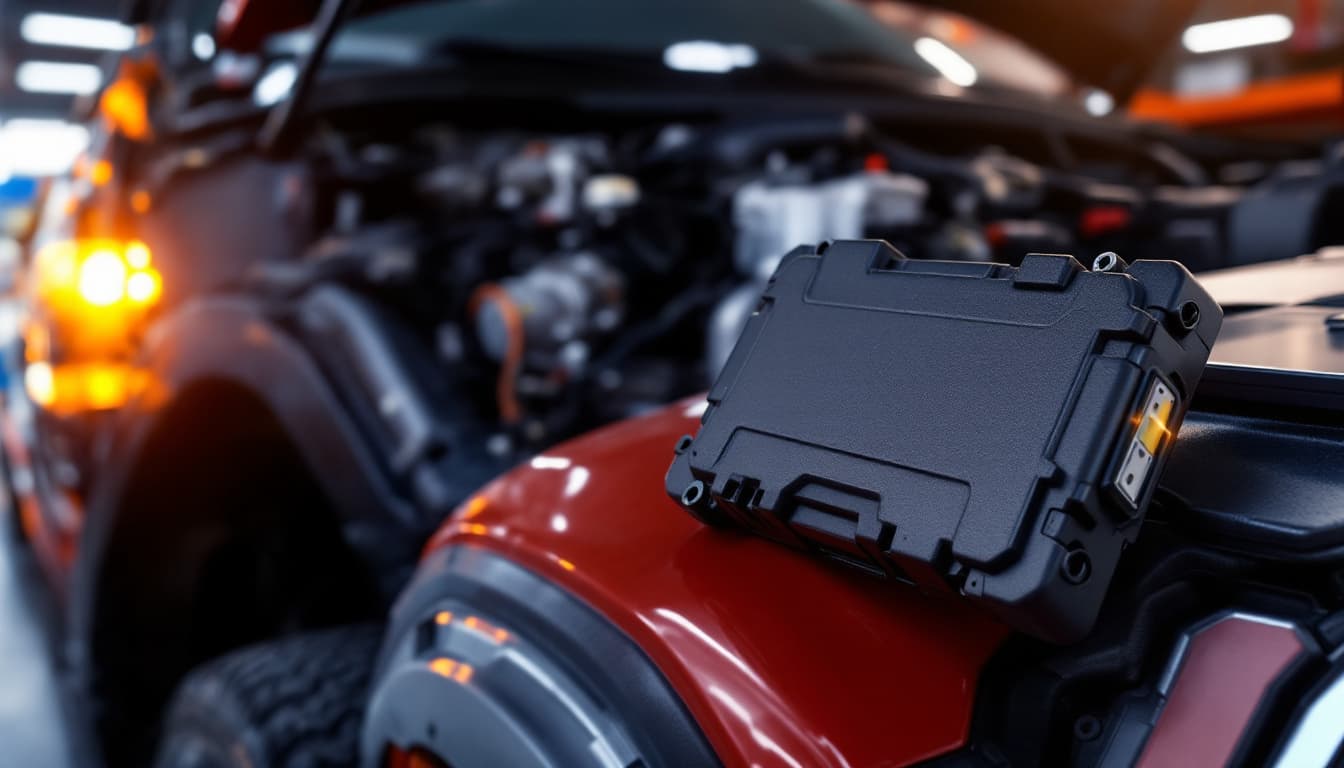
GM ECM Programming & VIN Relearn (E38, E67) — Annetta TX
GM engine control module programming in Annetta TX. Why an E38 or E67 ECM must be flashed and VIN-matched, how the theft-deterrent link affects a swap, and what mobile programming costs.
An engine control module bought online is a box of hardware with somebody else's identity written into it. It does not know your VIN, it does not have your calibration, and on a GM vehicle it may still be electrically married to the theft-deterrent system of the truck it came out of. Bolting it in and hoping is how a weekend gets spent. Call or text (817) 813-9396 for mobile module programming in Annetta, Weatherford, Aledo, Willow Park, Hudson Oaks, Benbrook and Fort Worth.
Quick Answer
A replacement GM engine control module — the E38 and E67 families cover a huge swath of GM trucks, SUVs and cars — has to be flashed with the correct calibration for your VIN, have the VIN written into it, and then be relinked to the vehicle's theft-deterrent system before the engine will start and stay running. As of August 2026, mobile ECM programming typically runs $280 to $520 on site. The module itself is separate.
Module Programming Pricing in Annetta TX
| Service | Typical Price Range | Notes |
|---|---|---|
| ECM programming to VIN, supplied module | $280–$500 | Flash, VIN write, verification |
| ECM programming plus theft-deterrent relink | $340–$620 | When the swap breaks the security link |
| PCM programming, older combined modules | $280–$500 | Separate module family |
| TCM programming | $250–$450 | Transmission side |
| Pre-purchase module compatibility check | $0 | Send the part number before you buy |
| Diagnostic scan before commitment | $80–$150 | Confirms the module is the fault |
Disclaimer: Ranges, not quotes. Model year, module family, condition of the donor module, and whether security data has to be rebuilt all move the number. Call or text (817) 813-9396 with your VIN and the part number off the module.
What "Programming an ECM" Actually Means
Three distinct operations hide behind that phrase, and skipping any of them leaves you with a vehicle that runs badly or not at all.
Calibration flash. The software that tells the module how to run your specific engine, transmission, emissions equipment and axle ratio. A module carrying a calibration from a different configuration will run — poorly — and set codes that chase you in circles.
VIN write. Modern GM vehicles cross-check module identity across the network. A module with the donor vehicle's VIN can trigger communication faults, emissions readiness problems, and a check-engine light that no amount of sensor replacement fixes.
Theft-deterrent relink. This is the one that surprises people. On GM vehicles the engine control module participates in the immobilizer handshake. Swap the module without relinking it and the vehicle cranks, fires briefly, and dies — behavior identical to a bad key, which sends owners down an expensive wrong path buying keys they never needed.
For how these modules relate to each other across a vehicle, our overview of ECU, ECM, PCM, BCM and TCM programming is the plain-language map.
Used Module Versus New Module
Both are legitimate. They fail differently.
A new module ships blank and takes your VIN and calibration cleanly. Highest cost, fewest surprises, and the theft-deterrent relink is a standard procedure rather than a rescue operation.
A used module from a salvage vehicle costs a fraction as much and arrives carrying the donor's VIN, calibration, and security data. Whether it can be reprogrammed depends on the specific module and year. Some accept a complete rewrite without complaint. Some are effectively bound to the donor and are, functionally, an expensive paperweight.
Send the part number before you buy. That check costs nothing and it is the single highest-value five minutes in this entire process. A module that cannot be reprogrammed for your vehicle is not a bargain at any price.
The same reasoning applies to the combined powertrain modules on older GM vehicles — see our PCM replacement and VIN programming guide.
The Symptom That Sends People Down the Wrong Path
A vehicle that cranks, fires, and dies after a module swap looks exactly like an immobilizer key problem. Owners buy a key. Then a second key. Then they start reading about transponders.
The actual cause is usually that the new module has not been relinked to the theft-deterrent system. The key is fine. The vehicle simply does not recognize the module as a trusted participant in the security handshake, so it cuts fuel a second after start.
The way to tell them apart is a scan, not a purchase. If the vehicle has recently had a powertrain module replaced and then started doing this, the module is the first suspect — not the key. Our guide to the security light and immobilizer no-start covers the genuine key-side version of the same symptom.
Other Signs the ECM Is the Problem
None of these are proof on their own. Together they build a case.
No communication with the module on a scan tool. Either unpowered, off the network, or dead. Check power and grounds before condemning hardware — a corroded ground on a fifteen-year-old truck causes exactly this.
Multiple unrelated codes across systems. A module producing garbage data upstream makes healthy sensors look faulty.
Random stalling with no mechanical pattern. Fuel and ignition problems usually correlate with load, temperature, or throttle. Truly random stalling is more consistent with an electronic fault.
Emissions monitors that never set ready. Common after a module swap that was never properly programmed — the module has no valid drive-cycle history because it does not believe it is in your vehicle.
Water intrusion or heat damage visible on the module. GM mounts these in a variety of places, and some are less protected than others. Visible corrosion on the connector is a real finding.
What the Appointment Looks Like
Battery support first, always
Programming holds the ignition on for an extended write. A battery that sags mid-flash can permanently brick the module — a genuinely expensive way to save five minutes. A maintainer goes on before anything is written. This is not optional and any shop that skips it is gambling with your part.
Pre-scan
A full network scan documents what the vehicle is doing before anyone changes anything. It also catches the case where the module was never the problem.
Flash and VIN write
Correct calibration for your VIN, then the VIN itself.
Theft-deterrent relink
The module is reintroduced to the security system. On GM this frequently involves a timed relearn — the vehicle sits in a specific ignition state for a set period. It cannot be shortened. Plan for it rather than being surprised.
Post-scan and run verification
Codes cleared, network re-scanned, engine started and run. On vehicles with a drive-cycle requirement you get instructions for what to do over the next stretch of driving so monitors set properly.
Why Mobile Programming Makes Sense Here
Vehicles needing ECM work frequently cannot be driven. Towing a non-running truck to a dealership costs money and a day and does not add capability — the programming happens through the diagnostic port either way. The equipment travels to the driveway, the repair shop's lift, or the yard where the truck died. Coverage runs across Annetta, Weatherford, Aledo, Willow Park, Hudson Oaks, Benbrook and Fort Worth.
If a repair shop is doing the mechanical work, they generally welcome the programming visit — it lets them finish the job without sublet delays.
Frequently Asked Questions
Does a replacement GM ECM need to be programmed?
Yes. A replacement engine control module has to be flashed with the calibration matching your VIN, have the VIN written to it, and be relinked to the vehicle's theft-deterrent system. Without those steps the engine may not start, may stall immediately, or may run with persistent faults.
How much does ECM programming cost in Annetta TX?
As of August 2026, mobile ECM programming typically runs $280 to $500, or $340 to $620 when security data also has to be rebuilt. The module itself is a separate cost, sourced by you or your repair shop.
Can a used ECM from a junkyard be reprogrammed?
Sometimes. It depends on the module family and model year — some accept a complete reflash and VIN rewrite, others are effectively locked to the donor vehicle. Send the part number before buying so it can be checked against your VIN.
My truck cranks and dies right after the ECM was replaced — is it the key?
Usually not. That symptom after a module swap is most often the theft-deterrent link between the new module and the vehicle, not the key. Buying keys before diagnosing this is a common and expensive detour.
Do I need to tow the vehicle to a dealership?
No. Programming works through the vehicle's own diagnostic network with portable equipment, so it is done wherever the vehicle sits — a shop lift, a driveway, or a yard.
Why does the battery matter so much during programming?
Because a voltage drop during a flash can corrupt the write and permanently ruin the module. The vehicle sits with the ignition on for the length of the procedure, so a support charger is standard practice, not an upsell.
Get the Module Programmed Where It Sits
If a module is on order, already installed, or you are deciding between new and used, start with the part number. Call or text (817) 813-9396 with your VIN and it gets checked before you spend anything.
Article written by the Annetalocksmith Automotive Locksmith Team. Reviewed by a working automotive locksmith technician.